Home › Blog › How Digital Scanning and 3D Planning Improve Dental Treatment
Oral HealthHow Digital Scanning and 3D Planning Improve Dental Treatment
November 18, 2026
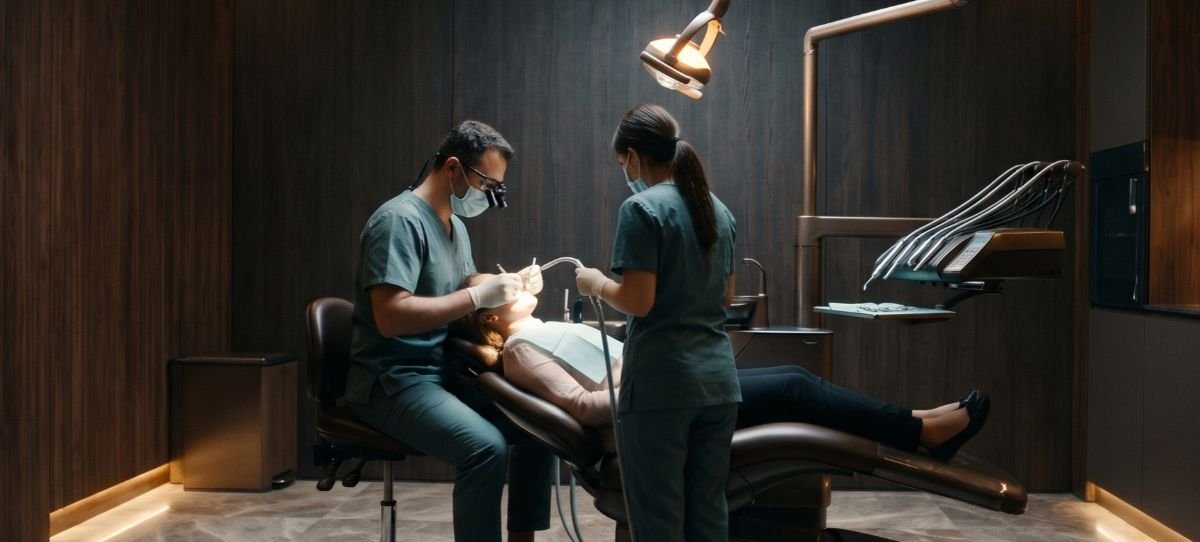
As a dentist at Dentalingo in Alanya, Antalya, I often hear patients say, "I'm worried about impressions" or "I want to know what will happen before you start." Digital scanning and 3D planning address both concerns. They make treatment more comfortable and more precise, and they let you see the plan before any work begins.
What Is Digital Scanning?
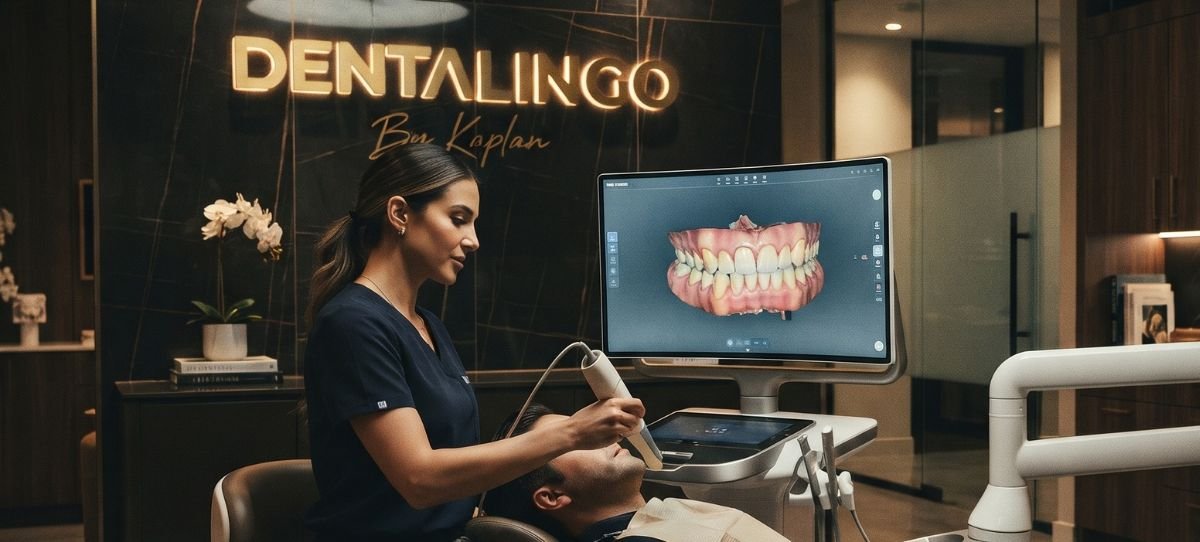
A digital intraoral scan uses a small handheld camera that moves gently over your teeth and gums. In a few minutes it records thousands of images and builds an accurate 3D model of your mouth on screen. In most cases it replaces the trays of impression material many people dislike.
Why Digital Scanning Is Better for Patients
- More comfortable: No heavy, gooey trays, and far less gagging.
- Higher accuracy: Digital models avoid errors such as air bubbles, distortion or material shrinkage.
- Instant visualisation: You can see your teeth in 3D, and I can show you exactly where a problem is.
- Faster workflow: The scan goes straight to the dental laboratory or to our design software, which saves time.
- Better fitting restorations: Crowns, bridges, veneers and aligners fit more precisely when they are designed from an accurate digital model.
What Is 3D Planning?
3D planning combines the digital scan with 3D imaging, such as cone beam computed tomography (CBCT) when it is clinically needed. This lets me study bone volume, nerve position, sinus anatomy and tooth roots in three dimensions, rather than guessing from a flat 2D image. We can then plan the treatment on the computer before touching a single tooth.
How 3D Planning Improves Specific Treatments
Dental Implants
For implants, 3D planning helps me choose the right size, angle and position, and it helps me keep a safe distance from nerves and sinuses. In suitable cases, a surgical guide made from the plan can help transfer it accurately to the mouth. This supports a more predictable, less invasive procedure and can reduce the need for extra surgery.
Crowns, Bridges and Veneers
With CAD/CAM design, we can shape the restoration on screen, check the bite and adjust the contour before it is made. The result is a restoration that is better fitted and more natural looking, with fewer adjustments at the fitting appointment.
Smile Design
Digital tools let us simulate a possible result. You can discuss shape, length and proportions with us, so you have realistic expectations and take part in the decision. A simulation is a guide, and the final result depends on your anatomy and your treatment.
Clear Aligners and Orthodontic Planning
A digital scan is the starting point for most clear aligner treatments. Software shows the planned tooth movements step by step, so you know what to expect and roughly how long it may take.
Fewer Surprises, Better Communication
The biggest advantage, in my experience, is transparency. When you can see your own scan and plan, you understand why a treatment is recommended, what the alternatives are and what the steps will be. Informed patients make better decisions and are generally more relaxed during treatment.
Are There Any Limitations?
Technology does not replace clinical judgement. Not every patient needs a 3D scan, and we only recommend one when it helps diagnosis or planning. In some cases, such as heavy bleeding or limited access, traditional methods may still be needed. Every treatment plan is based on a clinical examination first.
What to Expect at Your First Visit
- A conversation about your concerns and goals.
- A clinical examination.
- A digital scan, usually just a few minutes and painless.
- 3D imaging only if it is needed for your treatment.
- A clear explanation of your options, with the plan shown on screen.
Frequently Asked Questions
1. Is digital scanning painful?
No. The scanner is a small camera that does not touch your teeth with pressure. Most patients find it much more comfortable than traditional impressions.
2. How long does an intraoral scan take?
Usually a few minutes per arch, depending on the case.
3. Is a digital scan more accurate than a traditional impression?
For many treatments, digital scans give very accurate results and avoid the errors common with traditional materials. Accuracy still depends on the operator's skill and the case.
4. Does 3D imaging involve radiation?
The intraoral scanner does not use X-rays. CBCT does use a low dose of radiation, and we only recommend it when the benefit for your diagnosis or planning outweighs the exposure.
5. Do I need a 3D scan for every treatment?
No. It is mostly used for implants, complex surgeries, orthodontic planning and some root canal or jaw-related cases. Simple treatments often do not need it.
6. Can I see the result before treatment starts?
In many cases, yes. We can show a digital simulation or plan, although it is a guide and not a guarantee of the final result.
7. Does digital planning reduce the number of visits?
It often makes the process more efficient, but the number of visits depends on your treatment and your healing.
8. Is digital dentistry suitable for people with a strong gag reflex or dental anxiety?
Yes, it is often a good option. Without heavy impression trays, many anxious patients feel much more comfortable. Please tell us about your concerns so we can adapt our approach.
About This Article (E-E-A-T)
Content is approved by: CDT. Hüseyin Bayır, dental technician with more than 14 years of experience.
Article published: 18.11.2026
Contact Dentalingo: To book a free consultation or find our clinic address, please visit our contact page.
This article is for general information and does not replace a personal examination or medical advice.