Home › Blog › Dental Implants Guide: Process, Cost & FAQs
TreatmentsDental Implants Guide: Process, Cost & FAQs
November 07, 2026
As a dentist, the question I hear most often from patients is: "Is a dental implant right for me?" Losing a tooth affects far more than your smile. It changes how you chew, speak and feel about yourself, and over time it can lead to bone loss and shifting teeth. Dental implants are the closest thing we have to a natural tooth, and in this guide I explain, honestly and simply, what you should know before starting treatment.
What Is a Dental Implant?
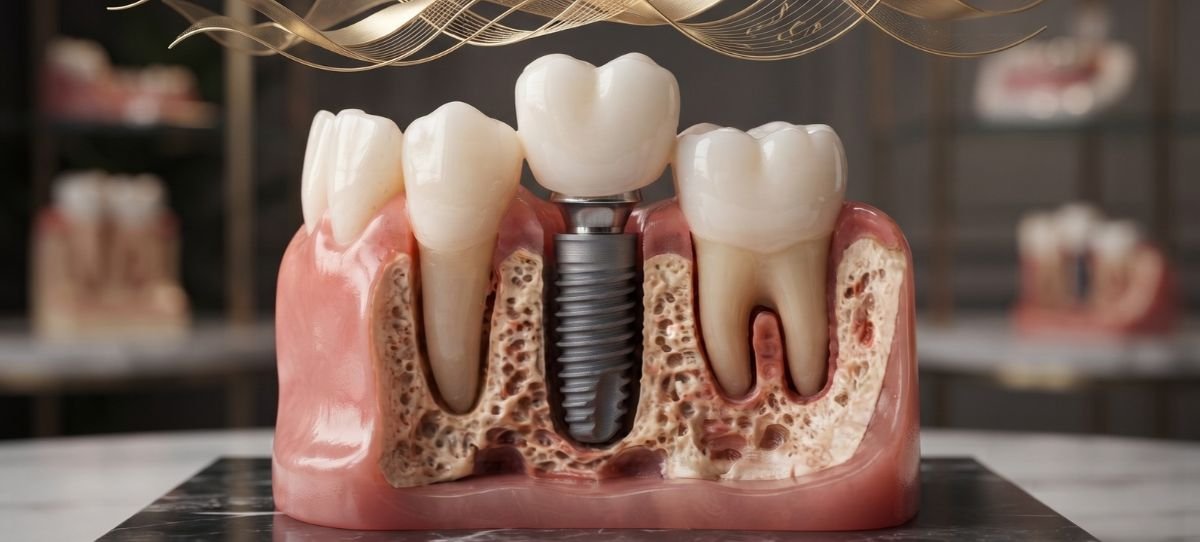
A dental implant is a small screw-shaped post, usually made of medical-grade titanium or zirconia, that is placed into the jawbone to replace the root of a missing tooth. Once it fuses with the bone (a process called osseointegration), it acts as a stable foundation for a crown, bridge or denture. Because the implant stimulates the jawbone just like a natural root, it helps prevent the bone shrinkage that follows tooth loss.
Who Is a Good Candidate?
Most healthy adults with a fully developed jawbone can have implants. The key factors I assess are:
- Bone volume and quality: enough bone is needed to hold the implant securely.
- Gum health: active gum disease must be treated first.
- General health: well-controlled diabetes, heart conditions or osteoporosis are not automatic barriers, but we need to know your full medical history.
- Habits: smoking significantly increases the risk of implant failure, so I always advise patients to cut down or quit.
If you do not have enough bone, that is not the end of the road. Bone grafting or a sinus lift can often rebuild the area.
Types of Implant Treatment
- Single-tooth implant: one implant and one crown, without touching neighbouring teeth.
- Implant-supported bridge: two or more implants carrying a bridge to replace several missing teeth.
- Full-arch solutions (such as All-on-4 or All-on-6): a whole row of teeth supported by 4 to 6 implants, ideal for patients with few or no teeth.
- Implant-retained dentures: a removable denture that clips onto implants for much better stability.
The Dental Implant Process Step by Step
- Consultation and 3D imaging: I examine your mouth, review your medical history and take a panoramic X-ray or 3D CT scan to plan the exact position of each implant.
- Treatment planning: we discuss the options, timeline and costs before anything starts.
- Implant placement: under local anaesthesia, the implant is placed in the bone. Sedation is available for anxious patients.
- Healing (osseointegration): usually 3 to 6 months, depending on bone quality and the area of the mouth. In suitable cases, a temporary tooth can be fitted the same day.
- Abutment and final restoration: a connector is attached, then your custom-made crown, bridge or denture is fitted. Your dental technician designs it to match your natural teeth in colour, shape and bite.
Does It Hurt?
This is the number one fear I hear. The procedure itself is performed under local anaesthesia, so you should feel pressure but not pain. Afterwards, mild swelling, tenderness or bruising for a few days is normal and is usually controlled with the medication I prescribe. Most patients return to normal activities within a day or two.
Aftercare: How to Make Your Implants Last
- Brush twice a day and clean between teeth daily with interdental brushes or floss designed for implants.
- Eat soft foods and avoid very hot, hard or sticky foods during the first days after surgery.
- Do not smoke, especially during healing.
- Attend check-ups and professional cleanings at least every 6 months.
- Tell your dentist if you grind your teeth at night. A night guard may protect your restoration.
With good care, implants can last decades, and in many cases a lifetime. In healthy patients, success rates are generally reported to be above 95%.
Possible Risks and Complications
Like any surgical procedure, implants carry some risks, including infection, peri-implantitis (inflammation around the implant), implant failure to integrate, and, rarely, nerve or sinus issues. Careful planning, sterile technique and good oral hygiene greatly reduce these risks. If you notice persistent pain, swelling, bleeding or a loose implant, contact your clinic immediately.
What Affects the Cost of Dental Implants?
The price depends on the number of implants, the brand and material, the type of crown, whether bone grafting or a sinus lift is needed, and the dentist's and laboratory's experience. I always recommend comparing complete treatment plans rather than just the lowest price, and asking about warranty, the implant brand and the follow-up care included.
Why Choose Dentalingo in Alanya?
Many of our patients travel to Alanya for dental care. Treatment can be planned so that your trip is efficient, with clear communication before you arrive, modern digital planning and personal follow-up after you return home. At Dentalingo, we explain every step in plain language so you always feel informed and comfortable.
Frequently Asked Questions (FAQs)
1. How long does the whole implant treatment take?
It depends on your case. Many patients complete treatment within 3 to 6 months, mainly because of the healing time. Cases needing bone grafts may take longer, while some suitable cases allow a temporary tooth on the same day.
2. Is the implant surgery painful?
No. The area is fully numbed with local anaesthesia. Afterwards, you may have mild discomfort for a few days, which is manageable with prescribed medication.
3. How long do dental implants last?
With good oral hygiene and regular check-ups, implants can last 20 years or more, often a lifetime. The crown on top may need replacing after many years due to normal wear.
4. Am I too old for dental implants?
There is no upper age limit. What matters is your general health and bone condition, not your age.
5. What if I do not have enough bone?
Bone grafting or a sinus lift can often rebuild the area so an implant can be placed. In some cases, shorter implants or full-arch techniques may also be an option.
6. Can I get implants if I have diabetes or smoke?
Well-controlled diabetes is usually not a barrier. Smoking does raise the risk of complications, so I strongly advise reducing or stopping it. We will assess your case individually.
7. How do implants differ from bridges and dentures?
A bridge relies on neighbouring teeth, which must be reshaped, and dentures can be loose. An implant replaces the root itself, protects the bone and feels and functions most like a natural tooth.
8. What happens if an implant fails?
Failures are uncommon. If an implant does not integrate, it can usually be removed, the area allowed to heal, and a new implant placed later. This is why follow-up visits are so important.
E-E-A-T Information
Content is approved by:
CDT. Hüseyin Bayır
Dental technician with more than 14 years of experience
Contact Dentalingo: To book a free consultation or find our clinic address, please visit our contact page.
Article published: 07.11.2026